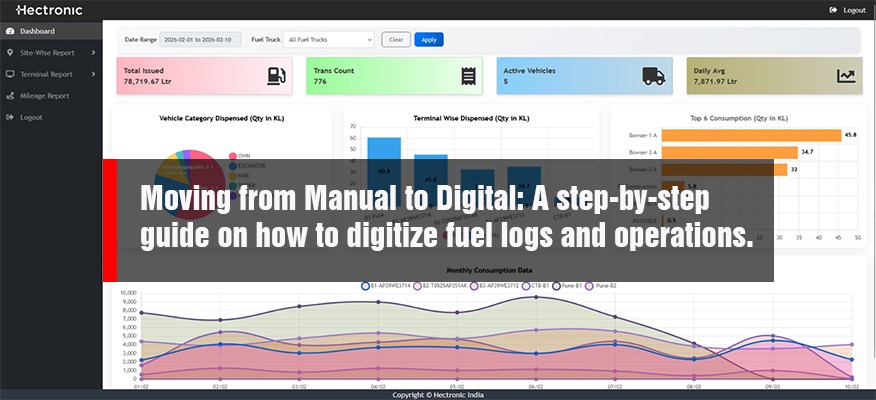
Moving from Manual to Digital
Is your business still running on guesswork and incomplete data? Consider the critical information that vanishes in the gaps of manual fuel logs: the precise volume of fuel dispensed, the exact time of the transaction, the vehicle’s true odometer reading, and the secure, tamper-proof record that proves it all. Without this information, you’re left with a financial liability—a silent drain on productivity and profitability. Are you truly confident that your fuel inventory is secure, that every transaction is legitimate, and that you have a transparent, real-time view of this critical, high-value asset? The analog approach is not just a legacy system; it's a silent drain on productivity and profitability. The time for a digital reckoning has arrived. This guide is your call to action—a strategic roadmap to move beyond the constraints of the past and embrace a digitized, automated future where control, accuracy, and insight are no longer aspirations, but operational certainties.
Step 1: Conduct a Comprehensive Operational Audit
Before any technology is deployed, a thorough understanding of the existing manual process is paramount. This initial phase involves a detailed audit of every aspect of current fuel management. Key questions to address include:
- Data Collection Points: Where and how is fuel data currently recorded? (e.g., dipstick readings, driver logbooks, a central spreadsheet).
- Workflow Mapping: Who is responsible for each step of the process, from fuel receipt to dispensing and reconciliation?
- Identify Pain Points: What are the most common challenges and inefficiencies? (e.g., misplaced logs, data entry errors, delays in reporting, unauthorized fueling).
- Loss Analysis: Estimate the financial impact of current inefficiencies, including unaccounted-for fuel and administrative overhead. This audit provides a crucial baseline for measuring the return on investment (ROI) of the new system and highlights the specific areas where automation will yield the greatest benefits.
Step 2: Select and Integrate the Right Technology
The core of the digital transformation lies in the selection and integration of a robust automated fuel management system. The ideal solution should be an end-to-end ecosystem, not just a standalone piece of software. A comprehensive system, such as Hectronic’s suite of solutions, typically includes:
- Automatic Fuel Terminals (AFTs): These are the on-site controllers that manage the fueling process. They must be compatible with existing fuel dispensers and capable of real-time data capture.
- Vehicle Recognition Technology: The shift from manual identification to automated vehicle recognition (AVR), often through RFID tags, is a cornerstone of digitalization. This ensures that only authorized vehicles can receive fuel, eliminating a major source of loss.
- High-Accuracy Measurement: Deploying certified flow meters and Automatic Tank Gauges (ATGs) is essential. This eliminates the guesswork of manual measurement, providing precise data on dispensed fuel and tank inventory, including volume, temperature, and water levels.
- Cloud-Based Software (HecPoll): This is the brain of the operation. A cloud-based platform for data aggregation, analysis, and reporting is non-negotiable. It should offer a user-friendly dashboard, customizable reports, and remote accessibility, enabling managers to monitor operations from any location.
Step 3: Configure the System and Master Data Management
With the hardware in place, the next step is to configure the system to reflect your operational reality. This involves setting up the "master data"—the foundational information that will govern the system's logic. This phase includes:
- User and Vehicle Registration: All vehicles and authorized personnel must be registered in the system, each assigned a unique RFID tag or authorization code. This ensures a strict "No Authorization, No Fueling" policy.
- Define Permissions and Limits: Establish specific rules and parameters. For instance, you can set daily or weekly fuel limits for individual vehicles, authorize specific fuel types, and define access permissions for different user roles.
- Establish Communication Protocols: Configure the wireless data transfer between the AFTs and the central software. This ensures that every transaction is instantly and securely recorded, transforming a paper trail into an immutable digital record.
Step 4: Training and Phased Rollout
A digital transformation is as much about people as it is about technology. A phased rollout, beginning with a pilot program, is crucial to minimize disruption and ensure user adoption.
- Comprehensive Training: All personnel involved, from fuel operators to administrative staff, must receive thorough training on the new system. This includes how to use the AFT, understand the new authorization process, and navigate the HecPoll dashboard for reporting.
- Pilot Program: Implement the system in a controlled environment with a small fleet or a single fueling bay. This allows for the identification and resolution of any issues before a full-scale deployment.
- Measure and Adjust: During the pilot, rigorously compare the new digital data with the old manual records. This helps to validate the system's accuracy and build confidence in the new process. Use this feedback to fine-tune the system and training protocols.
Step 5: Leverage Data for Strategic Advantage
Once the system is fully operational, the final and most powerful step is to move beyond mere data collection to strategic data utilization. The digital system provides a torrent of rich data that was previously unavailable.
- Operational Transparency: Use the real-time data to monitor fuel consumption patterns, identify inefficiencies, and pinpoint areas of potential loss. The HecPoll dashboard, with its graphs and reports, provides a clear, at-a-glance view of your entire operation.
- Predictive Analytics: Utilize historical data to forecast future fuel needs, enabling a just-in-time inventory strategy that reduces carrying costs and prevents stockouts.
- Performance Optimization: Analyze fuel consumption by vehicle and driver to identify inefficient practices, maintenance issues, or training needs. This transforms fuel data into a powerful tool for improving overall fleet performance.
In conclusion, the journey from manual fuel logs to a digitized, automated system is a strategic imperative for any business serious about operational efficiency and cost control. By following this systematic approach—from initial audit to strategic data utilization—organizations can successfully navigate this transition, replacing guesswork with precision, inefficiency with agility, and vulnerability with an unwavering digital control over one of their most valuable assets. The result is a more resilient, transparent, and profitable operation, primed for the challenges of the modern industrial landscape.